

If you have been doing everything you can to lose weight and still feel stuck, you are not alone. Many adults searching for “medical weight loss Littleton” options want a more structured, medically guided approach that goes beyond generic meal plans and one-size-fits-all online programs.
Medical weight loss can offer that structure. Instead of relying on guesswork, you work with a clinical team to evaluate your health history, understand your goals, and build a plan that may include lifestyle guidance, ongoing monitoring, and, when appropriate, medications such as Semaglutide or Tirzepatide.
At RAVE Clinics, this approach fits within a broader focus on wellness and longevity, helping patients think beyond quick fixes and toward a plan they can realistically follow.
Medical weight loss is a clinician-guided approach to weight management that starts with your individual health picture, not a trend. It is designed to help patients make informed decisions with medical oversight, structured follow-up, and a plan that can be adjusted over time.
Trying to lose weight on your own often means sorting through conflicting advice, cycling through restrictive diets, or relying on short-term motivation. A medically supervised program is different because it is built around screening, safety, accountability, and realistic progress.
Medical supervision matters because weight loss is not just about willpower. Appetite regulation, metabolic health, stress, sleep, hormones, daily routines, and past dieting history can all affect progress.
With a clinic-based plan, your provider can help identify what may be getting in the way and create a more practical strategy. That may include discussing nutrition patterns, activity levels, medication history, medical conditions, and how to support consistency over time.
For patients exploring medical weight loss in Littleton, that structure can feel very different from trying to piece together advice from social media or national subscription platforms.
Semaglutide and Tirzepatide are part of a broader conversation around GLP-1-based care. When medically appropriate, these medications may be used within a comprehensive weight management plan, not as a stand-alone shortcut.
They are often discussed by people who want help with appetite control, portion awareness, and adherence to a more sustainable routine. But they are not the right fit for everyone, and they still work best when paired with ongoing support and behavior change.
If you are specifically researching weight management in Littleton, it helps to think of GLP-1 options as one tool within a structured medical program rather than the entire plan.
A medically supervised program may be a good fit for adults who feel frustrated by repeated dieting, inconsistent results, or the lack of a clear plan. It can also appeal to people who want a more informed conversation about whether prescription support makes sense for their situation.
Some patients are looking for help with appetite, some want better accountability, and others are trying to improve overall wellness with guidance from a real care team.
People often seek medical weight loss support because they are dealing with challenges such as:
In a local setting like Littleton, many patients are not looking for hype. They want clarity, support, and a program that takes their actual lifestyle into account.
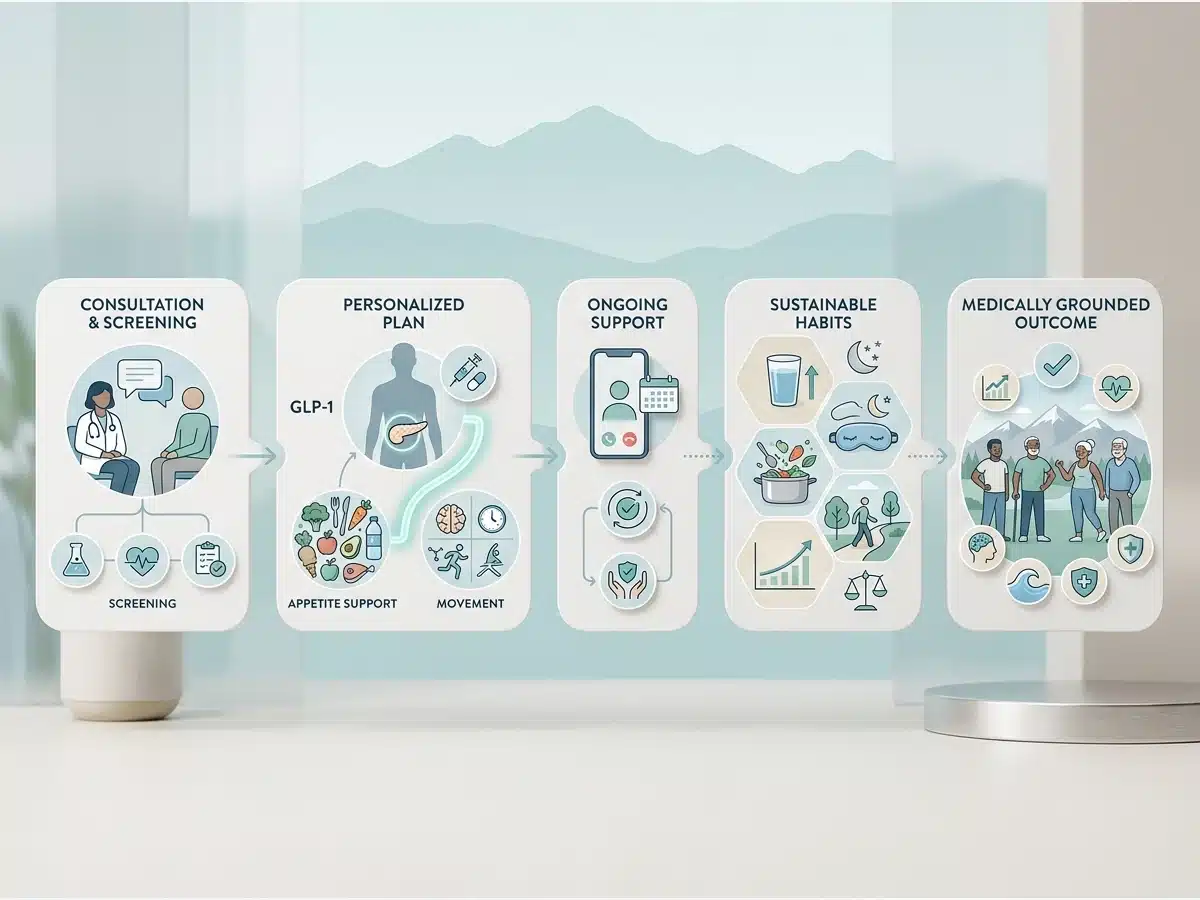
Not everyone is a candidate for every type of treatment, which is why screening matters. A proper evaluation helps determine whether a medically supervised approach is appropriate and what kind of plan makes the most sense.
This is one reason many patients prefer a provider connected to broader longevity medicine services. A wider clinical lens can support better decision-making and help keep the conversation focused on long-term health, not just short-term scale changes.
Your first consultation is usually about getting a clear picture of where you are now, what you have already tried, and what kind of support you need moving forward. It should feel practical and informative, not rushed.
During an initial visit, your provider may ask about:
This conversation helps shape a personalized plan instead of forcing you into a generic template.
After screening, treatment planning may include lifestyle recommendations, education around expectations, and discussion of whether medication belongs in the plan. Follow-up is where the program becomes more useful, because that is when adjustments, accountability, and problem-solving happen.
That ongoing relationship is often what separates clinic-based care from one-time advice. It gives patients a place to ask questions, discuss side effects or appetite changes, and stay grounded in realistic next steps.
Weight loss programs tend to work better when patients are supported through the ups and downs of real life. Motivation can change from week to week, and progress is rarely perfectly linear.
Ongoing support gives you a framework for staying engaged, even when routines shift or expectations need to be recalibrated.
Even when GLP-1 medications are part of the plan, lifestyle support still matters. Nutrition, hydration, movement, sleep, and habit consistency all remain important. Medical treatment does not remove the need for these basics, but it may help some patients follow through more effectively.
A good program keeps the focus on what is sustainable. That often means making steady improvements instead of chasing extremes.
One of the biggest advantages of medically supervised weight loss is that it encourages a more grounded mindset. Instead of expecting instant transformation, patients can focus on measurable, manageable progress and adjust as needed.
That matters because unrealistic promises are part of what makes the weight loss space so frustrating. A practical program should leave room for questions, changes, and honest conversations about what progress actually looks like.
Online programs can seem convenient, but many patients still want in-person support or access to a real clinical team nearby. Local care can offer a stronger sense of accountability and a clearer process when questions come up.
For Littleton-area patients, that local connection can make it easier to stay engaged and make informed decisions over time.
When you work with a local clinic, you know where to go when you need guidance. You are not relying on an anonymous platform or waiting for a generic response. That can be especially important when treatment involves medication questions, follow-up planning, or changes in how you are feeling.
A real care team can help keep expectations grounded and help you stay consistent when the process feels less straightforward than you hoped.
Medical weight loss often works best when it is viewed in the context of overall wellness. A clinic with a wider longevity focus may be better positioned to help patients think through not just weight, but also routine, energy, habits, and sustainable health decisions.
RAVE Clinics offers longevity medicine in Littleton as part of that broader perspective, which can be helpful for patients who want a more complete and thoughtful care experience.
Patients who plan to stay engaged with ongoing wellness services may also want to explore the clinic’s membership options as part of a longer-term self-care strategy.
Medical weight loss is a clinician-guided approach to weight management that uses evaluation, personalized planning, and ongoing support to help patients pursue realistic progress. Depending on the patient, the plan may include lifestyle changes, monitoring, and prescription treatment.
Semaglutide and Tirzepatide may be considered as part of a broader medical weight loss strategy when a provider determines they are appropriate. They are typically discussed alongside screening, follow-up, and lifestyle support rather than as a replacement for those elements.
A good candidate is someone who wants structured, clinician-guided support and may benefit from a more personalized plan than self-directed dieting offers. Candidacy depends on individual health history, goals, and screening results, so not everyone will be the right fit for the same approach.
That varies. Some patients need shorter-term structure, while others benefit from longer follow-up and ongoing accountability. The timeline depends on goals, response to treatment, and how the plan evolves over time.
Yes. Even when GLP-1 medications are used, nutrition, movement, hydration, sleep, and day-to-day habits still matter. Medication may support the process, but long-term success usually depends on building routines you can realistically maintain.
If you are thinking about medical weight loss in Littleton, the most useful next step is to have a real conversation with a qualified provider. That gives you a chance to ask questions, understand whether you may be a candidate, and learn what a structured plan could look like for your situation.
If you want to learn more about RAVE Clinics’ approach, you can review their medical weight loss services or explore their dedicated weight management Littleton page.
When you are ready to take the next step, contact RAVE Clinics to schedule a consultation and get personalized guidance based on your goals, health history, and preferences.

